


Originally published by The Horsemen’s Journal | Spring 2026
WORDS: PETER J. SACOPULOS
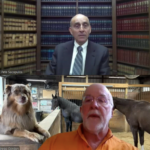
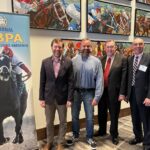
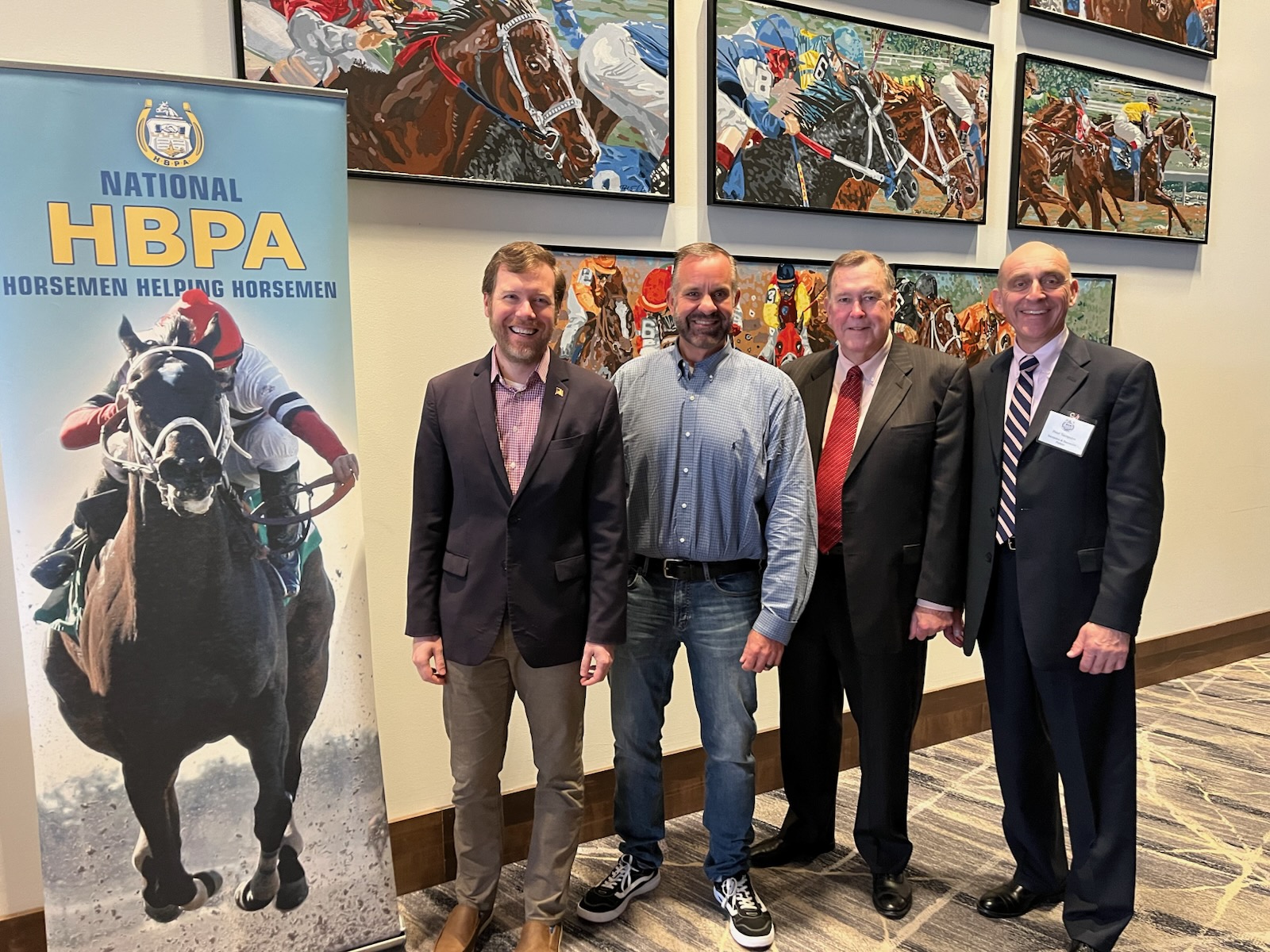
On March 4, 2026, Peter Sacopulos moderated a panel presentation at the National Horsemen’s Benevolent and Protective Association (HBPA) Conference in Hot Springs, Arkansas, entitled “HISA: Law, Litigation, and the View from the Inside Rail.” This panel included Ed Martin, President and CEO of the Association of Racing Commissioners International; Daniel Suhr, founder of the Center for American Rights; and Brent Malmstrom, owner and operator of KAM Racing Stables. This panel of individuals offered a comprehensive and candid analysis of the Horseracing Integrity and Safety Act (HISA) as it stands today—legally, practically, and from the perspective of those most directly affected.
Technology challenges and opportunities, ongoing legal issues, racetrack ownership options and small-stable opportunities mark annual HBPA conference
How horsemen face ongoing challenges while leveraging potential opportunities for growth, innovation and meaningful change led the discussion and panels during the 2026 National HBPA Conference held March 3-6 at Oaklawn Racing Casino Resort in Hot Springs, Arkansas.
The in-depth event included panels on artificial intelligence, prediction markets, challenges and opportunities for smaller to midsize stables, reimagined racetrack ownership, medication issues and ongoing legal challenges involving the Horseracing Integrity and Safety Authority (HISA).
The opening panel of the three-day confab dug right into the ongoing and perhaps biggest issue facing horsemen: the myriad obstacles set forth by HISA and the Horseracing Integrity and Welfare Unit (HIWU). Discussions of HISA andHIWU are regular fixtures at the HBPA conference, and presenters in the panel “HISA: Law, Litigation and the View From the Inside Rail” painted the need for reform at a minimum.
Ed Martin, CEO of the Association of Racing Commissioners International, made the case that the benefits of HISA have been minimal for its substantial cost to tracks and horsemen.
Martin, whose group represents pari-mutuel racing regulators, said HISA’s budget increased from the initial $66.49 million in 2023 to $78.42 million for 2026. He said the incidence of catastrophic injuries remains extremely low and that it’s not clear that incremental improvements had to do with HISA, noting the low numbers for some non-HISA tracks.
He said no new drugs or doping agents have been called by the HISA-contracted laboratories from the old system in which individual states oversaw testing and rules enforcement. Martin said there is less transparency andaccountability under HISA, a private entity with no public meetings or public records and that essentially approves its own budget, compared with state racing commissions.
Martin’s conclusion after three years of HISA: “HISA is doing a credible job at a greatly increased cost with results comparable to those previously achieved by the state racing commissions. The racing industry has lost transparency, independent financial oversight and the checks and balances that safeguarded the public when dealing with a government agency.”
Horse owner Brent Malmstrom said he’s spent millions of dollars financing the appeals of sanctions handed to two trainers under HISA for alleged drug-rule violations: Jonathan Wong, with whom Malmstrom has horses but not the one in question, and Phil Serpe, whom he says he’s never met. Why? “Because I believe in the cause,” the owner said.
“We believe that you cannot take someone’s economic livelihood away from them without an appropriate opportunity to defend yourself,” Malmstromsaid. “And in this scenario that exists today, where you go through this arbitration process, where you don’t get to pick the arbitrator—it’s assigned— where you don’t get to do discovery, you don’t get to do disclosures, you don’t get to do depositions. … It’s really about fundamental fairness.
“This is not inexpensive to do,” he continued. “But if you don’t do it, how will change occur? … When I look at where we started and where we are today, there have been some changes, and some of it is good. Your adverse analytical finding notice, you’re no longer immediately suspended. Back when this happened several years ago [with Wong], we had 18 hours to disperse 140 horses, and that’s on a Fourth of July weekend. There has been some progress made.”
Panel moderator Peter Sacopulos, an equine attorney based in Indiana, said it’s important to get mediation introduced into the adjudication system. “Because many in this industry simply cannot afford to go through the administrative gauntlet and then try to look at judicial review,” he said. “It’s simply too expensive. … You’ve placed a price tag on due process that is too expensive for the average person to purchase.”
Daniel Suhr, lead counsel in the National HBPA’s legal challenge to HISA, noted that the Supreme Court sent the case back to the 5th U.S. Circuit Court of Appeals—where the horsemen previously have won twice—to be considered in the wake of the
SCOTUS ruling in a similar case. Suhr said he just didn’t see Judge Stuart Kyle Duncan, who twice ruled in favor of the National HBPA in striking down HISA’s enforcement mechanism, changing his mind this time around.
“Ultimately, we’re going to be back where we were before we got sidetracked, which is at the U.S. Supreme Court,” Suhr said. “We can’t have rules provisions and not have enforcement provisions. So, if the court agrees with us just on the enforcement part and strikes that down, the whole bill fails. And if the whole bill fails, Congress has to go back and fix the problem, and so at that point, we will essentially force Congress’ hand.
What that fix looks like is not up to me, right? That is for … all of you to figure out.”